lasttr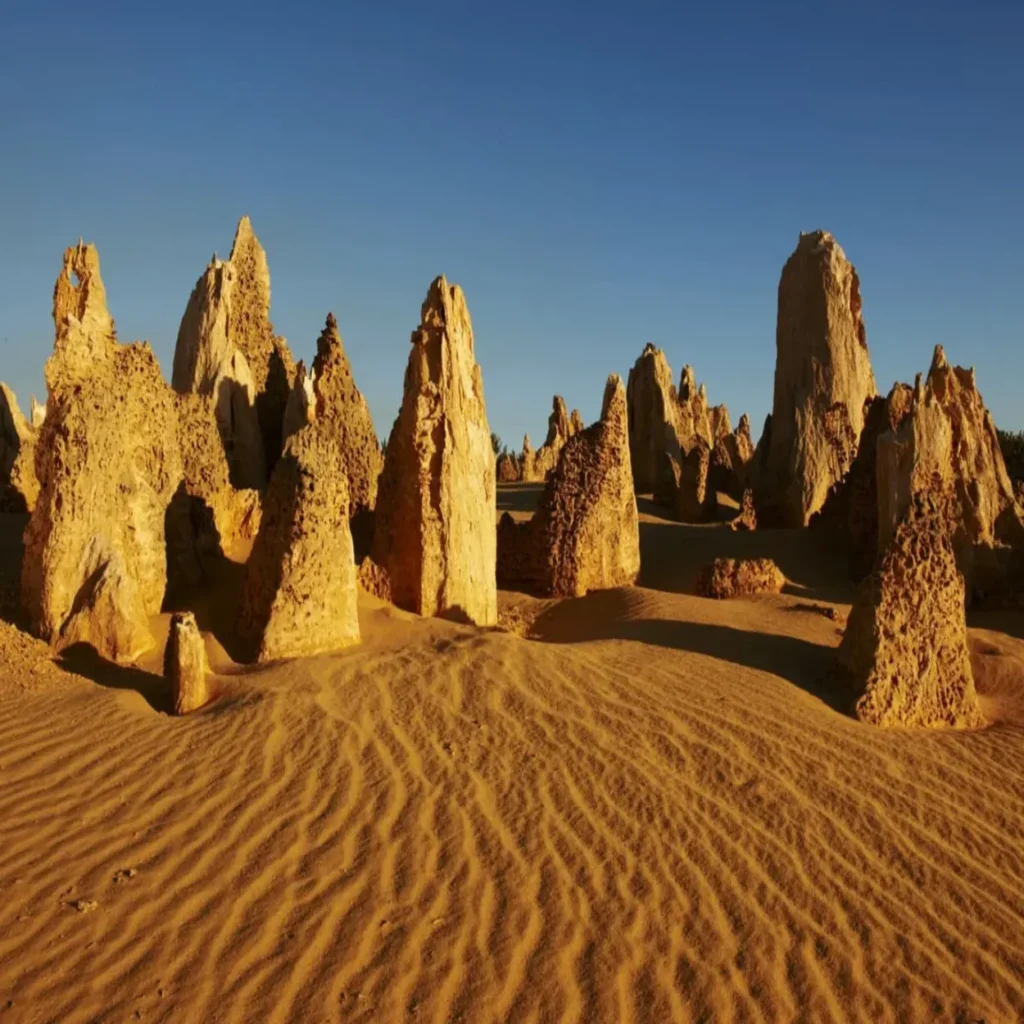
Nambung National Park is 245 kilometres from Perth, and we visited it on one of the days of our stay. It took us a long time to get there, and we stopped to take pictures of flowers, trees, and everything else that caught our eye.
At some point, a cluster of unusual trees caught our eye, and we decided to study them in more detail, especially since we had never seen such trees anywhere before. It turned out that this is the Xanthorrhoea Grass Trees.
It looks like a palm tree, but its top has a tuft of grass instead of the usual palm leaves. The Grass Tree is endemic and has a lifespan of about 600 years.
Previously, the Aborigines and all other inhabitants of Australia called this plant “black boy” since its trunk does not burn but melts and becomes covered with soot during forest fires. However, due to certain political correctness, it has now changed its name everywhere to “grass tree.” The leaves secrete a thick resin that hardens to form a trunk. The substance of the barrel does not burn well, but it melts like sealing wax.
Inside this plastic pillar is a fibre core that feeds the leaves. The name means “red current” and comes from the colour of the resin secreted by the leaves, which hardens and turns black.
Generally, more than 75% of all plants in Australia are found only on this continent, so any blade of grass or flower here is simply unique.
Having stopped at the natural thickets of this plant, we eventually gathered many cars around us, the passengers of which, like us, began photographing what we were filming. But this has already become a constant component of our travels – as soon as we start photography, someone stops nearby and starts filming (usually on a mobile phone) J.
Well, we move on to the primary goal of today’s journey – the Pinnacles Desert.

Translated from English, “pinnacles” means “turrets“. They resemble turrets of various heights, shapes and topography. Some believe these are limestone rocks; others believe ancient trees turned into towers, overgrown with sand dust over time.
The first mention of Pinnacles was found in the navigation journal of Dutch sailors. Seeing these limestone formations from the side of their ship, they thought that they had discovered an ancient, unknown city, not believing that nature could create such sculptures.
Scientists have been unable to explain this phenomenon for a long time, and today, they have not reached a consensus. The generally accepted version, however, is that there was an ocean here millions of years ago. During the Ice Age, sea levels rose 150 meters above current levels, flooding the coastal area. Eighty thousand years ago, the water receded, enriching the soil with shell rock, sea salt, and microorganisms.
Trees grew on fertile soil, sending roots deep into the ground, destroying the stone underneath, and softening the limestone. Water contributed to the destruction process by washing away the lime. Then, the forest had a fire, and the trees burned down. Either the water receded further, the climate became drier, and spontaneous combustion began. Ocean winds carried away the burned earth, and quartz sands from nearby beaches occurred. Because of this, those places between the roots of the trees where there was no soil remained because sand rock does not burn.
This area belongs to the Coral Coast and is 6 km from the ocean. You can move around the desert by car; upon entry, each visitor is given a small area map. There is also a 1.5-kilometer walking route.
We went on foot, considering it simply barbaric to travel in such a unique place by car. However, a considerable excursion bus with Chinese tourists disembarked before us, making this walk unpleasant.
Interestingly, more than 6,000-year-old exhibits were found in the desert, indicating the presence of locals in this territory.
Scientists discovered that shifting sands covered the peaks for some time, and they reappeared after a few hundred years.
This is because drifting sand periodically opens and closes the peaks again, thanks to the southern wind. The peaks have been visible in modern times since 1960, after which the site was added to Nambung National Park.
Nature and people continue to change the appearance of this fantastic place. Water washes away lighter rocks, the wind blows out cracks and holes, temperature changes cause cracks, and tourists climbing them and taking pictures hugging them destroy them even more mercilessly.
Wandering quite a distance from the main entrance to this park, we saw parrots and ostriches with babies, and it was touching to watch this brood chasing their mother.
The world is so beautiful, be it stones or animals, plants or just a sunset on a dusty
FAQ
What are the formations in Pinnacles Desert?
The desert rises again and again into thousands of limestone pinnacles, these are set in the yellow sands of Nambung National Park in Western Australia. The formations differ in size with some standing several meters high believed to have been formed from seashells that were cemented into limestone thousands of years ago and later shaped by erosion.
How do I explore Pinnacles Desert?
Pinnacles can be explored through different means such as scenic drives, walking trails or guided Perth Pinnacles tours. A 4 km long loop is offered by Pinnacles Desert Drive that is accessible by all types of vehicles and it gives a close look at the angled rocks. There are also shorter walks like the 1.2 km long Pinnacles Desert Walk Trail and the even shorter walk called Pinnacles Lookout Trail which leads visitors to an expansive view.
Are there good times to visit Pinnacles Desert?
In addition, sunrise or sunset provide excellent light for photography including beautiful colors created by low sun casting elongated shadows over the desert enhancing texture and contours of limestone pillars.
What kind of wildlife can one see in Pinnacles Desert?
Kangaroos and emus inhabit this dry region. There are also various kinds of birds that live here because of its diverse ecosystem hence making it a nice place for bird watching.
What items should I carry on my visit to Pinnacles Desert?
It’s important to come with protective clothing such as sunscreen, hat; have much water, comfortable boots for walking around as well as a camera so you don’t miss any perfect picture moments! You will also need snacks since there’s limited food within the park.
Are there facilities available at Pinnacles Desert?
Yes, The Pinnacles Desert Discovery Centre offers educational displays on natural and cultural heritage of the area where facilities include gifts hop, café and toilets. The use of solar power and rainwater harvesting is an eco-friendly design implemented within the centre.
Can I bring my pet to Pinnacles Desert?
This will protect its fragile ecosystem and wildlife from pets that could destroy them.
Are there any charges for entering Pinnacles Desert?
Yes, a standard park entry fee applies to access Nambung National Park where Pinnacles Desert is located.
May I go stargazing in Pinnacles Desert?
Definitely, the desert of pinnacles is an ideal place to go for stargazing as it is far away from human settlements and has fewer artificial sources of light contamination. The night skies are crystal-clear and pitch-black encompassing the sight of our galaxy and uncountable stars. In order to make your experience more comfortable, bring a blanket, thermos bottle and any other things that can be used for relaxing under the open sky at night. Do consider the weather conditions and moonphases before going out though because they may influence what you see.